Printing Fly

FREE SHIPPING on All Orders in Los Angeles

FREE SHIPPING on All Orders in Los Angeles

Author name: PrintingFly

Blog

Upgrade Your Next Event with the Perfect Step and Repeat Backdrop

A step and repeat backdrop is a large printed panel featuring a logo, or a small set of sponsor logos, arranged in a repeating pattern so that at least one logo is visible no matter how a photo is cropped. It gets its name from the way guests โ€œstepโ€ up for a photo, then move down the line to repeat the process for the next group. These backdrops are a staple at press conferences, red carpet premieres, corporate galas, and charity fundraisers because they turn every event photo into a piece of branded media. The two most common sizes are 8 feet by 8 feet, which comfortably fits two to four people, and 8 feet by 10 feet, which accommodates larger groups of four to six. Materials typically fall into two categories: matte vinyl, which is more budget-friendly and holds up well outdoors, and fabric, which offers a softer, non-reflective finish thatโ€™s especially well suited to flash photography. Choosing between them, along with the right size and layout, depends mostly on the venue, the expected group sizes, and how the backdrop will be photographed. The sections below walk through each of those decisions in detail. Why a Custom Step and Repeat Backdrop Is Essential for Professional Events A step and repeat backdrop does something no other piece of event signage can: it becomes part of every photo taken in front of it. Guests, press, and influencers naturally gravitate toward a well-designed backdrop for photo opportunities, which means the branding on it ends up circulating across social media, press coverage, and personal photo albums long after the event ends. This makes it one of the most cost-effective forms of extended brand exposure available to event planners. Beyond the marketing value, a professional backdrop also elevates the perceived quality of an event. A blank wall or a generic pop-up banner reads as an afterthought, while a custom-printed backdrop signals that the event was planned with care โ€” which matters just as much for a corporate product launch as it does for a red carpet premiere. How to Choose the Best Step and Repeat Backdrop Size for Your Venue Sizing a step and repeat backdrop comes down to two questions: how many people will typically stand in front of it at once, and how tall is the ceiling or space where it will hang? An 8-foot by 8-foot backdrop is the most popular standard size and comfortably fits two to four people. An 8-foot by 10-foot backdrop is a common upgrade for larger groups of four to six, and extension kits are available on many stands to expand a backdrop up to 16 feet wide for larger step-and-repeat walls. As a general planning rule, budget roughly two feet of width per person you expect to photograph together, and keep the minimum height around 8 feet so that logos remain visible even behind taller standing guests. Design Tips That Make Your Logo Stand Out in Every Event Photo The repeating pattern is the defining feature of a step and repeat design, and getting the spacing right matters more than most people expect. Step and repeat design guides recommend a staggered logo pattern rather than a strict grid, which prevents an awkward crop where a logo gets cut in half directly behind someoneโ€™s head. High-resolution vector artwork is essential, since the design will be enlarged significantly and any pixelation becomes obvious in professional photography. Color and contrast matter as well โ€” a logo in a color close to the background tone can wash out under camera flash, so itโ€™s worth testing high-contrast combinations before finalizing the design. Keep the layout relatively simple: one primary logo repeated cleanly reads far better in photos than a cluttered mix of multiple sponsor logos competing for space. Best Uses for Step and Repeat Backdrops at Corporate, Charity, and Red Carpet Events Corporate events use step and repeat backdrops for product launches, press days, and company milestones, where consistent branding in every photo reinforces the companyโ€™s presence across media coverage. Charity events and galas use them at check-in areas and photo stations, giving donors a polished photo opportunity while reinforcing sponsor recognition throughout the evening. Red carpet events remain the most iconic use case, where a backdrop lines the entrance or photo area so that every press photo and influencer post carries the eventโ€™s branding. Trade shows also use step and repeat backdrops at booths and demo stations as a compact way to reinforce a brand without the footprint of a full display wall. Fabric vs. Vinyl Step and Repeat Backdrops: Which Is Right for Your Event? Material Best For Key Tradeoff Matte Vinyl Outdoor events, frequent reuse, budget-conscious bookings More affordable, but can show wrinkles from rolled storage Fabric (Polyester/Canvas) Indoor press events, red carpets, flash photography Non-reflective and glare-free, but not recommended outdoors in wet weather Vinyl is the more economical and durable option for frequent use, especially outdoors, since itโ€™s water-resistant and holds its shape well over repeated setups. Fabric offers a softer, completely matte finish that eliminates camera flash glare, which is why many press and red carpet events lean toward fabric even at a slightly higher cost. Material comparison research notes that fabric backdrops are also machine washable and tend to last longer with proper care, which extends their value for organizations reusing the same backdrop across multiple events. Fabric also folds more compactly for storage and travel, while vinyl typically ships and stores rolled in a tube. Common Mistakes to Avoid When Ordering a Custom Event Backdrop The most frequent mistake is choosing glossy vinyl instead of matte โ€” a glossy finish reflects camera flash directly back into the lens, which can wash out or completely ruin event photos. Undersizing the backdrop for the expected group size is another common issue, leaving guests standing outside the printed area in photos. Skipping a design proof before printing is also risky, since a spacing error in a repeating logo pattern is far more noticeable once
Blog, Signs & Banners

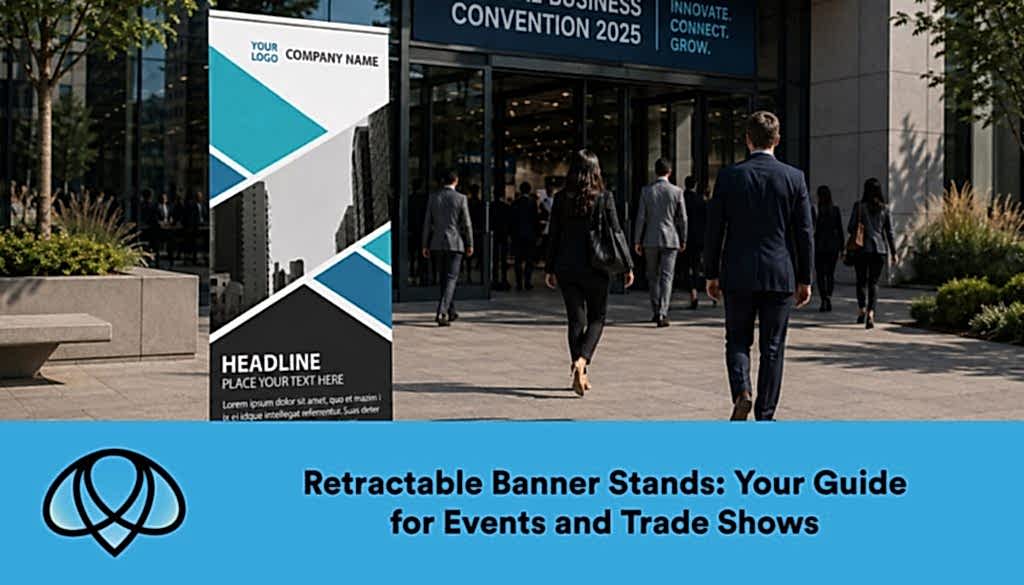
Retractable Banner Stands: Your Guide for Events and Trade Shows

A retractable banner stand is a portable, free-standing display made up of a printed graphic that rolls into a weighted base and a telescoping pole that holds it upright. Set it up by extending the pole and pulling the banner up from the base until it clips into place, a process that takes well under a minute and requires no tools. When youโ€™re done, the graphic retracts back into the base for storage or travel, which is where the โ€œretractableโ€ name comes from โ€” itโ€™s also commonly called a pull up banner or roll up banner. These stands are the most widely used portable display in retail, trade shows, and events because they combine a large graphic area with a small footprint. A single unit typically weighs under 15 pounds and folds down to about the size of a golf bag, making it easy for one person to carry, set up, and break down without help. Businesses like retractable banners because the cost is a one-time investment rather than a recurring expense, and because the same stand can be reused for years across dozens of events simply by swapping in a new printed graphic. The sections below cover where these displays work best, how to pick a size, and what to look for in a stand built to last. What Is a Retractable Banner Stand? At its core, a retractable banner stand is a spring-loaded cassette base with a printed graphic wound inside it, paired with an adjustable pole that locks the top of the banner in place once itโ€™s pulled up. This mechanism is consistent across the industry: extend the telescoping pole, pull the banner up from the base, and clip it in โ€” the entire process takes under 60 seconds with no tools required. The graphic itself is usually printed on vinyl or a coated fabric material, and the whole unit ships with a padded carrying case. Because the mechanism does the work of keeping the banner taut and upright, thereโ€™s no need for separate poles, stakes, or a wall to lean against, which is part of why these stands are so popular for indoor use. Where Retractable Banners Work Best Retractable banners are built for spaces where you need a big visual presence without permanent installation. Trade show booths are the most common setting, where a banner serves as a backdrop or side panel that reinforces branding next to a table or display. Retail storefronts use them near entrances or checkout counters to promote a sale or new product. Conference rooms, lobbies, and reception areas use them for wayfinding or company branding, and small businesses often bring one to community events, farmers markets, or pop-up shops where a professional-looking display needs to go up and come down quickly. Because the graphic stores inside a sealed base when retracted, these stands hold up well in office environments and indoor venues, though most standard models are best suited for indoor or covered outdoor use rather than direct sun and wind for extended periods. Standard Sizes and How to Choose One Retractable banners come in a handful of standard sizes, and picking the right one comes down to where youโ€™ll display it and how much content needs to fit on the graphic. Industry product specifications confirm that the 33โ€ณ x 81โ€ณ size remains the most popular format across the trade show and events industry, balancing display area with a compact footprint. Size Best For Notes 24โ€ณ x 63โ€ณ Small booths, tabletop areas, tight retail corners Most compact and easiest to carry 33โ€ณ x 81โ€ณ Trade shows, lobbies, storefronts The industry-standard size and most popular option 36โ€ณ x 92โ€ณ Large booths, conference stages, big-impact displays Maximum visibility, slightly heavier stand If youโ€™re unsure which size fits your space, measure the area where the stand will typically be placed and leave a few feet of clearance on either side so it doesnโ€™t feel cramped next to a table or wall. Most Los Angeles businesses working booths and storefronts find the 33โ€ณ x 81โ€ณ size hits the right balance of visibility and portability. What Makes a Durable, Reusable Banner Stand Not all banner stands are built to the same standard, and the difference shows up after repeated use. An aluminum base and pole, rather than lightweight plastic, holds up far better to the wear of being packed, unpacked, and set up dozens of times a year. Retractable stand product specifications commonly list aluminum retractable hardware alongside heavier vinyl or coated polyester graphic materials as the combination that holds up best for frequent business use. A replaceable graphic insert is another feature worth prioritizing โ€” it means the stand itself can be reused indefinitely while only the printed banner needs to be replaced when your messaging changes. Look for a padded travel case as well, since the case protects both the mechanism and the graphic from scuffs and dents between events. Design Tips for Roll-Up Banner Graphics A retractable banner has only a few seconds to make an impression, so the design needs to work at a glance. Trade show design research recommends prioritizing legibility at 10 to 20 feet, using bold sans-serif fonts, and keeping the headline text large enough to read from across a room โ€” a common guideline is roughly one inch of letter height for every ten feet of expected viewing distance. Keep the message to one clear idea rather than trying to fit a full sales pitch onto the graphic. Put your logo and the single most important line of text in the top half of the banner, since thatโ€™s the area people see first at eye level. High contrast between text and background matters more than color choice alone โ€” a busy photo background behind small text is one of the most common reasons a banner fails to read from a distance. How to Transport and Store Your Banner One of the advantages of a retractable banner is how easy it is to move between locations, but

Blog, Signs & Banners

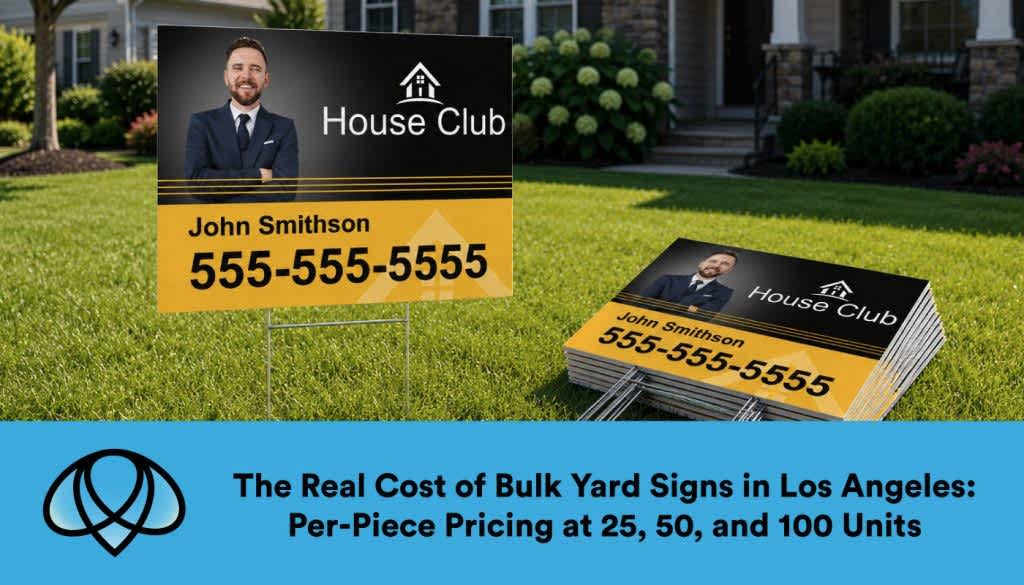
The Real Cost of Bulk Yard Signs in Los Angeles: Per-Piece Pricing at 25, 50, and 100 Units

When people ask about the cost of bulk yard signs, they are really asking one thing: how much does the price drop as the order gets bigger? The short answer is that yard sign pricing is not linear. Cost per sign decreases significantly once an order moves past a small batch, mainly because setup, plate creation, and machine calibration are one-time costs that get spread across more units as the run grows. A single custom yard sign might cost several dollars to produce, while that same design printed in a run of 100 can bring the per-piece price down by 40 percent or more. Material also plays a role in the final number. Corrugated plastic yard signs are the industry standard for large runs because the material is lightweight, weather-resistant, and inexpensive to produce at scale compared to metal or wood alternatives. Buyers ordering for real estate campaigns, political races, or seasonal promotions typically see the steepest savings once they cross the 50-sign or 100-sign threshold. Understanding where those price breaks happen, and what actually drives cost up or down, makes it much easier to budget accurately before placing an order. The sections below break down the pricing tiers, the variables that matter most, and how to avoid paying more than necessary. Why Bulk Yard Sign Pricing Gets Lower as Order Quantities Increase Bulk pricing works the same way for yard signs as it does for most printed products: fixed costs get divided across more units. Every print job carries setup costs that donโ€™t change whether you order 10 signs or 500 โ€” the press has to be calibrated, the design has to be prepped for print, and the material has to be cut to size. Once that setup is complete, printing additional signs adds relatively little to the total cost. This is why the price per sign drops sharply between small and mid-size orders, then continues to decrease, though more gradually, as quantities climb into the hundreds. Material buying power adds another layer of savings. Suppliers who purchase corrugated plastic sheets in bulk pay less per square foot than they would for a small batch, and that discount gets passed along on larger orders. For buyers, the practical takeaway is simple: if there is any chance you will need more signs later, ordering them together up front is almost always cheaper than placing two smaller orders. Per-Piece Cost Comparison for 25, 50, and 100 Yard Signs Pricing varies by vendor, sign size, and design complexity, but the general pattern across the yard sign printing industry looks similar to the table below. These figures are illustrative starting points, not a fixed quote โ€” always confirm exact pricing for your specific design and quantity. Order Quantity Typical Per-Sign Price Range* Approx. Savings vs. 25-Sign Order 25 signs $6.00 โ€“ $9.00 per sign Baseline 50 signs $4.50 โ€“ $6.50 per sign ~20โ€“25% lower 100 signs $3.00 โ€“ $4.75 per sign ~40โ€“45% lower *Based on a standard 18โ€ณ x 24โ€ณ single-sided corrugated plastic yard sign with a one-color design. Full-color printing, double-sided runs, and larger sizes will shift these numbers. Factors That Affect Bulk Yard Sign Pricing in Los Angeles Several variables move the needle on final cost, and understanding each one helps explain why two โ€œbulkโ€ quotes for the same quantity can look very different. Sign material is the biggest factor. Corrugated plastic remains the go-to choice for outdoor signage because it is lightweight, waterproof, and holds up through rain and sun without warping โ€” a durability profile confirmed across industry material guides on coroplast signage, which is why it remains the standard across the sign printing industry for real estate, political, and event use. Beyond material, the number of print colors, whether the sign is single- or double-sided, the finished size, and whether stakes or frames are included all affect the quote. Rush turnaround also adds a premium, since expedited jobs get pushed ahead of standard production queues. Finally, design complexity matters โ€” a simple one- or two-color layout prints faster and cheaper than a full-color photographic design, which requires more ink coverage and, in some cases, a different print process altogether. Choosing the Right Order Quantity for Your Business or Campaign The right quantity depends heavily on how the signs will be used. Real estate agents typically order in smaller batches of 10 to 25 reusable signs, since the same sign can be moved from listing to listing. Research on real estate signage usage shows that a majority of agents still rely on yard signs as a core part of their marketing mix even in a digital-first market. Political campaigns and local elections, on the other hand, usually need signs by the hundreds, distributed across yards throughout a district, which is one reason real estate and political yard signs in Los Angeles remain a steady, recurring order for many organizations. Event promoters, HOA notices, and seasonal sales fall somewhere in between, often ordering 25 to 100 signs depending on the size of the area they need to cover. A good rule of thumb: estimate the number of locations you need to cover, add a buffer of 10 to 15 percent for damaged or misplaced signs, and round up to the next pricing tier if you are close to a break point โ€” the savings from the higher tier often outweigh the cost of the extra signs. Common Mistakes That Can Increase Your Yard Sign Printing Costs A few avoidable missteps tend to drive up the final bill on bulk yard sign orders. Ordering in odd quantities that fall between standard pricing tiers is one of the most common โ€” requesting 40 signs instead of 50 often costs nearly the same per piece, without unlocking the better rate. Skipping the design proof is another costly mistake, since errors caught after printing mean paying for a reprint rather than a simple correction. Rush orders placed without planning ahead also add unnecessary expense, as do last-minute size changes that force a new

Blog, Signs & Banners

13oz vs 18oz Vinyl Banners: Which Should You Choose?

When comparing vinyl banner options, the two numbers that come up most often are 13oz and 18oz. That number refers to the weight of the material per square yard, and it is the single biggest factor in how a banner performs. A heavier banner is not just thicker for the sake of it โ€” more weight means a denser internal scrim, better tear resistance, and in most cases a blockout layer that stops light from passing through the material. A 13oz vinyl banner is the industry standard for short-to-medium term use: it prints beautifully, hangs flat, and holds up well for events, trade shows, and retail promotions lasting anywhere from a few days to about a year. An 18oz vinyl banner is a heavier-duty blockout material built for double-sided printing and long-term outdoor installations, where wind, sun, and rain exposure would wear a lighter material down faster. Neither weight is universally โ€œbetterโ€ โ€” the right choice depends entirely on where the banner will hang, how long it needs to last, and whether it will be printed on one side or two. The sections below break down exactly how to make that call. What Do Banner Weights Actually Mean? Vinyl banner material is measured in ounces per square yard, and that number tells you how dense and heavy the fabric is. A 9oz material is thin and best for very short-term indoor signage. A 13oz material is the most commonly ordered weight across the industry, striking a balance between cost, flexibility, and durability. An 18oz material is considerably heavier, with a reinforced scrim and, in most cases, a solid blockout layer built into the middle of the vinyl. Weight is not the only spec that matters, but it is the fastest way to compare two banners at a glance. Heavier vinyl generally means a longer outdoor lifespan, better resistance to tearing at the grommets, and the ability to print on both sides without one side showing through the other. 13oz Vinyl Banners: Best Uses and Lifespan A 13oz vinyl banner is the go-to choice for trade show signage, retail promotions, grand openings, and event banners that need to look sharp without a heavy price tag. It is lightweight enough to roll up and transport easily, and it prints cleanly on both eco-solvent and UV printers. Outdoors, a well-finished 13oz banner typically holds up for several months to about a year depending on sun exposure and local weather, which makes it a solid fit for seasonal campaigns, single events, or signage that will be replaced or refreshed on a regular basis. Where 13oz vinyl falls short is in permanent, harsh-weather installations or anywhere the banner needs to be read from both sides โ€” the lighter material lacks a full blockout layer, so light and shadowing from one side can show through on the other in bright conditions. 18oz Blockout Banners: When You Need Them An 18oz blockout banner adds a dense, light-blocking core layer between two outer layers of vinyl. That extra density does two things: it eliminates any bleed-through between sides, which makes double-sided printing possible, and it significantly increases tear strength at the grommets and edges. Material comparison guides note that 18oz blockout vinyl is generally reserved for billboard-style installations, multi-year outdoor signage, and building facades where replacement cost makes durability the priority. This is the material to specify for permanent building signage, street pole banners, and any installation that needs to survive a full year or more of direct outdoor exposure. The tradeoff is cost and weight. An 18oz banner typically costs 20 to 35 percent more per square foot than 13oz, and the added weight makes it a poor fit for retractable banner stands or anywhere a lightweight, easily transported display is the priority. How Long Do Vinyl Banners Last Outdoors? Material Typical Outdoor Lifespan Best For 13oz vinyl 6โ€“12 months Events, promotions, single-sided signage 18oz blockout vinyl 2โ€“3+ years Permanent installs, double-sided banners These are general ranges, not guarantees โ€” actual lifespan depends heavily on climate, sun exposure, and how well the banner is finished and installed. A banner facing direct southern exposure in a hot climate will fade faster than one mounted in partial shade, regardless of material weight. Indoor vs Outdoor Banner Material Choices For indoor use, weight matters far less since the banner isnโ€™t exposed to sun, rain, or wind. A 13oz banner is more than durable enough for trade show booths, retail interiors, and one-time events, and its lighter weight makes it easier to hang without extra support. For outdoor use, the calculation changes: short-term outdoor events (a weekend festival, a single grand opening) can still use 13oz comfortably, but anything left outside for months at a time benefits from either 13oz treated with extra UV-resistant coating or a jump straight to 18oz blockout material. Wind Resistance and Proper Finishing Material weight only tells part of the story โ€” proper finishing is just as important for how a banner performs outdoors. Reinforced hems around all four edges prevent fraying, and metal grommets spaced evenly along the border distribute wind load so the banner doesnโ€™t tear loose in a gust. Production guides on banner finishing point out that ink and coating choices also affect long-term durability, alongside proper curing time before installation. For larger banners or high-wind locations, wind slits (small cut vents that let air pass through rather than catching the whole banner like a sail) reduce strain on the grommets and mounting points significantly. Skipping proper finishing is one of the most common reasons a banner fails early, regardless of material weight. A heavier 18oz banner with poor grommet spacing can fail just as fast as a well-finished 13oz banner in the same conditions. How to Choose the Right Banner for Your Project Start by asking three questions: How long does the banner need to last? Will it be viewed from one side or two? And how exposed will it be to direct sun, wind, and rain? A short-term event or

Blog, Color Printing

The 8 Most Common Uses for Large Format Printing That Southern California Businesses Overlook

What Is Large Format Printing? Large format printing is the process of producing oversized graphics and signage for marketing, branding, advertising, and informational purposes. Businesses use large format printing to create eye-catching displays that attract customers, improve brand recognition, and communicate important messages in retail stores, offices, trade shows, construction sites, and outdoor environments. Common large format printing products include banners, window graphics, wall murals, vehicle wraps, trade show displays, floor graphics, and construction site signage. Professionally produced large format printing helps businesses create highly visible branding that makes a lasting impression. This guide explains how custom large format printing can be used across a variety of industries, highlights the most popular applications, and explains what to consider before investing in oversized graphics. Why So Many SoCal Businesses Are Choosing Large Format Printing Southern California businesses operate in one of the countryโ€™s most competitive markets, making visibility more important than ever. Large format printing allows businesses to capture attention both indoors and outdoors while creating consistent branding across multiple locations and marketing channels. Industries that frequently use large format printing include: Retail stores Restaurants Healthcare providers Construction companies Real estate agencies Automotive businesses Schools and universities Event organizers Corporate offices Professionally printed graphics help businesses stand out while reinforcing their brand throughout the customer experience. Window Graphics and Storefront Displays That Attract Customers Storefront graphics are often the first impression customers have of a business. Popular applications include: Store hours Promotional sales Frosted privacy graphics Perforated window film Full storefront branding Seasonal promotions Product displays Custom window graphics transform unused glass into valuable advertising space while enhancing the appearance of your business. Floor Graphics and Interior Signage That Guide Visitors Interior graphics improve navigation while reinforcing your brand throughout a building. Common uses include: Directional signage Safety messaging Promotional floor decals Office branding Lobby graphics Retail navigation Wayfinding systems Professionally installed graphics help create a more organized and engaging customer experience. Outdoor Banners and Event Signage That Command Attention Outdoor signage is designed to attract attention from greater distances while withstanding changing weather conditions. Popular products include: Vinyl banners Mesh banners Pole banners Event signage Grand opening banners Promotional displays Building banners Choosing the right material helps ensure long-lasting performance for outdoor advertising. Vehicle Wraps and Fleet Graphics That Turn Every Drive Into Advertising Vehicle graphics allow businesses to promote their brand wherever they travel. Applications include: Full vehicle wraps Partial wraps Fleet graphics Commercial vans Service trucks Company cars Trailer graphics Vehicle wraps provide continuous brand exposure while creating a professional appearance on the road. Trade Show Displays and Exhibition Backdrops Trade shows require displays that attract visitors while communicating your brand effectively. Large format printing products commonly used for events include: Backdrops Retractable banners SEG fabric displays Table covers Promotional signage Pop-up displays Hanging graphics Coordinated exhibit graphics help businesses create a polished and memorable booth experience. Construction Site Wraps and Hoarding Graphics Construction projects often use large format graphics to improve site appearance while promoting future developments. Common applications include: Construction fence wraps Building wraps Hoarding graphics Development signage Project branding Safety signage These graphics help transform construction sites into professional marketing opportunities while communicating project information. Wallcoverings, Murals, and Environmental Graphics Large format printing can completely transform interior spaces through custom wall graphics. Businesses often install: Corporate wall murals Branded office graphics Retail feature walls Educational graphics Healthcare environments Restaurant dรฉcor Inspirational messaging Environmental graphics create immersive spaces that strengthen branding and improve the customer experience. The American Marketing Association (AMA) also provides marketing insights and branding resources that can help businesses develop more effective visual communication strategies. Why Choose Printing Fly for Large Format Printing? Printing Fly provides professional large format printing solutions for businesses, organizations, retailers, contractors, and event professionals throughout Los Angeles and beyond. From banners and vehicle wraps to window graphics, trade show displays, wall murals, construction signage, and custom branding solutions, we produce high-quality graphics designed to help your business stand out with vibrant color, durable materials, and expert craftsmanship. Frequently Asked Questions What products are considered large format printing? Large format printing includes banners, window graphics, wall murals, vehicle wraps, floor graphics, trade show displays, construction signage, posters, and oversized promotional materials. What materials are used for large format printing? Depending on the application, materials may include vinyl, mesh, adhesive films, fabric, canvas, rigid boards, corrugated plastic, foam board, acrylic, aluminum composite panels, and specialty wallcoverings. Is large format printing suitable for outdoor use? Yes. Many large format products are specifically designed for outdoor environments and are printed on weather-resistant materials with UV-resistant inks for long-lasting durability. Request a Quote Looking for high-quality large format printing for your business, event, storefront, or marketing campaign? Printing Fly offers custom banners, window graphics, vehicle wraps, trade show displays, wall murals, construction signage, and a full range of large format printing solutions designed to help your brand make a lasting impression. Contact Us: 310-287-9982.

Blog, Signs & Banners

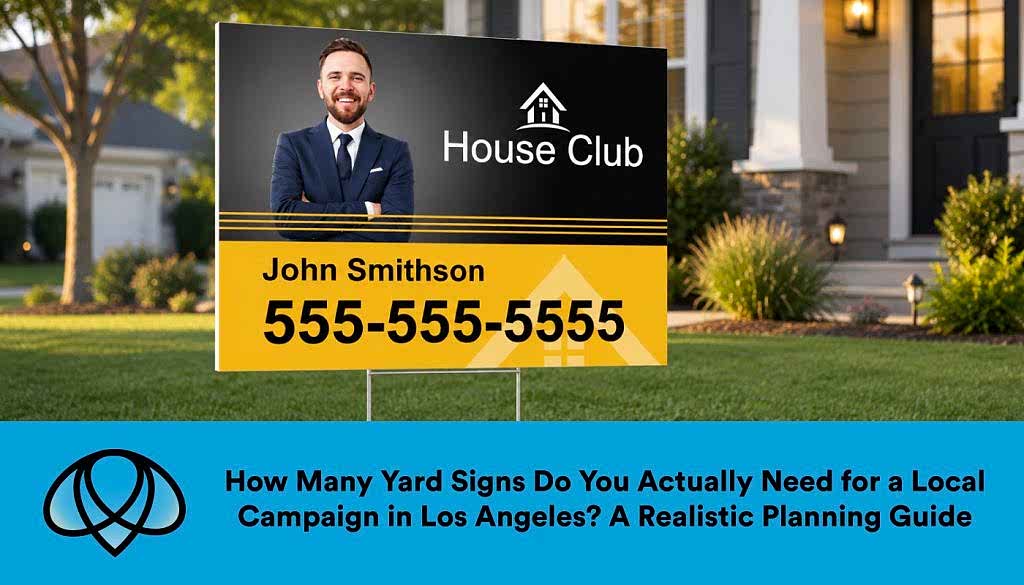
How Many Yard Signs Do You Actually Need for a Local Campaign in Los Angeles? A Realistic Planning Guide

What Is Yard Sign Printing? Yard sign printing allows businesses, political campaigns, real estate professionals, contractors, schools, event organizers, and community organizations to promote messages in highly visible outdoor locations. Printed on durable, weather-resistant materials such as corrugated plastic (Coroplast), custom yard signs are designed to withstand outdoor conditions while attracting attention from passing pedestrians and motorists. Whether youโ€™re advertising an open house, promoting a local event, supporting a political campaign, or marketing your business, professionally produced yard signs printing can help increase visibility while reaching your target audience. This guide explains how yard signs printing can help support local campaigns, how custom yard printing can improve visibility, how to estimate the right quantity of signs, plan effective placement, and maximize your campaignโ€™s success. Why Most Local Campaigns Either Over-Order or Under-Order Yard Signs Many organizations guess how many yard signs theyโ€™ll need instead of creating a placement strategy. Ordering too few signs can reduce visibility and leave important neighborhoods uncovered, while ordering too many may increase costs and leave unused inventory after the campaign ends. Planning your sign locations before ordering helps ensure better coverage while making the most of your marketing budget. How to Map Your Target Neighborhoods and Estimate Coverage Before placing an order, identify where your audience is most likely to see your signs. Consider placing yard signs near: Busy intersections Neighborhood entrances Commercial districts Community events Schools Parks Real estate listings Construction projects Event venues Creating a simple placement map helps estimate how many signs youโ€™ll actually need while avoiding unnecessary duplication. Key Factors That Determine How Many Yard Signs You Should Order Several variables affect the ideal order quantity. These include: Campaign size Geographic coverage Event duration Local sign regulations Daily traffic volume Number of placement locations Replacement signs Budget Evaluating these factors before ordering helps prevent shortages while reducing unnecessary expenses. How Campaign Type, Duration, and Goals Impact Your Order Size Different campaigns require different numbers of signs. For example: A weekend community event may only require a small number of directional signs. A political campaign may need hundreds of signs placed throughout multiple neighborhoods. Real estate professionals often order signs based on the number of active listings. Contractors may use yard signs at completed job sites to build local brand awareness. Matching your order quantity to your campaign objectives helps improve efficiency and overall results. A Practical Formula for Calculating the Right Yard Sign Quantity While every campaign is unique, a simple planning formula can help estimate your needs. Start by determining: Number of target neighborhoods Number of desired placement locations Additional replacement signs Extra signs for future events For many local marketing campaigns, ordering a small surplus is helpful in case signs become damaged, lost, or need to be relocated during the campaign. Planning ahead often results in a more organized and cost-effective marketing strategy. Organizations such as the American Marketing Association (AMA) also provide marketing resources and best practices that can help businesses plan more effective local advertising campaigns. Why Choose Printing Fly for Yard Sign Printing? Printing Fly provides high-quality custom yard sign printing for businesses, real estate professionals, political campaigns, contractors, schools, nonprofit organizations, and community events. We offer durable weather-resistant materials, vibrant full-color printing, multiple size options, and professional finishing to help your message stand out wherever itโ€™s displayed. Frequently Asked Questions What material are most yard signs made from? Most custom yard signs are printed on corrugated plastic (Coroplast), which is lightweight, weather-resistant, and durable enough for outdoor use. How long do yard signs last outdoors? Depending on weather conditions and material quality, professionally printed yard signs can last for several months or longer with proper installation. Can I order different designs in one order? Yes. Many printing companies offer multiple designs within the same order for businesses, events, or marketing campaigns that require different messaging. Request a Quote Need professional custom yard signs for your next marketing campaign, event, real estate listing, or business promotion? Printing Fly offers high-quality yard sign printing with durable materials, vibrant graphics, and fast turnaround times to help your message get noticed. Contact Us: 310-287-9982.

Blog, Indoor/Outdoor Displays

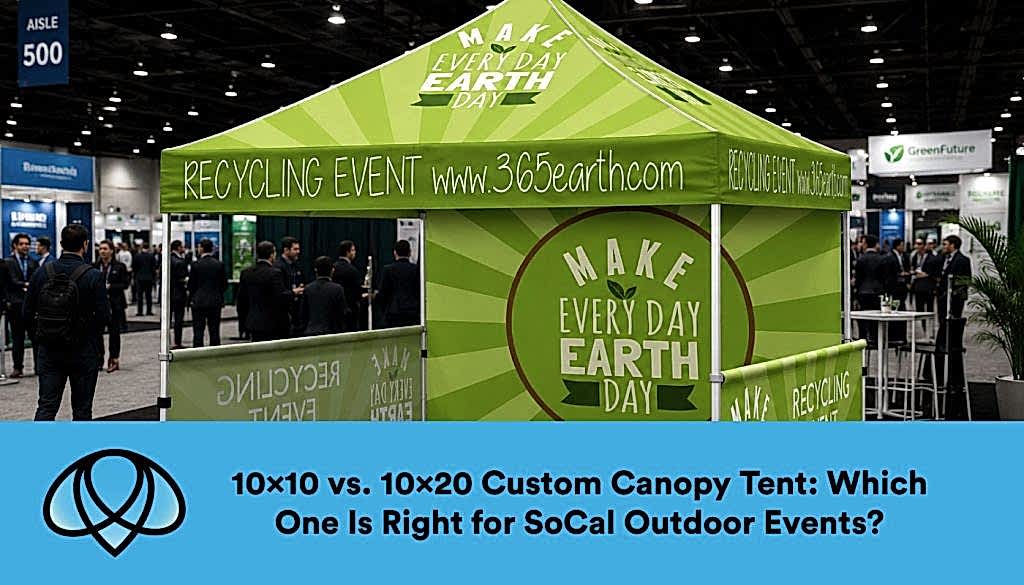
10ร—10 vs. 10ร—20 Custom Canopy Tent: Which One Is Right for SoCal Outdoor Events?

What Is Custom Event Tent Printing? Custom event tent printing allows businesses, organizations, schools, sports teams, and event vendors to showcase their brand with professionally printed canopy tents. These tents provide shade and weather protection while creating a highly visible, branded space for trade shows, festivals, farmers markets, sporting events, community gatherings, and outdoor promotions. Available in several sizesโ€”including the popular 10ร—10 and 10ร—20 canopy tents, custom event tents feature printed roofs, valances, and optional sidewalls that display logos, colors, and marketing messages. Choosing the right size, materials, and accessories helps create an inviting space while improving visibility and professionalism. This guide explains how custom event tents printing can help businesses create professional outdoor displays, compares the benefits of a 10ร—10 event tent, and explains how to choose the right size for your event before placing your order. Why Choosing the Right Canopy Size Is a Critical Decision Selecting the correct canopy size affects more than just appearanceโ€”it influences guest comfort, booth functionality, product displays, and overall event success. Before choosing a tent, consider: Available event space Number of staff members Product displays Tables and promotional materials Customer traffic Equipment storage A properly sized canopy helps create a welcoming environment while making the most of your event space. What a 10ร—10 Custom Canopy Tent Offers The 10ร—10 canopy tent is one of the most popular choices for vendors and exhibitors because itโ€™s compact, portable, and fits most standard event booth spaces. A 10ร—10 custom event tent is ideal for: Farmers markets Community events Trade shows Craft fairs School events Product demonstrations Small business promotions Its manageable size makes transportation, setup, and storage simple while still providing excellent branding opportunities. What a 10ร—20 Custom Canopy Tent Delivers Businesses needing additional space often choose a 10ร—20 canopy tent. The larger footprint provides room for: Multiple display tables Product demonstrations Interactive exhibits Larger sales teams Waiting areas Hospitality spaces A 10ร—20 tent is often preferred for larger festivals, sporting events, corporate activations, and promotional tours where additional coverage is beneficial. How Your Event Type, Guest Count, and Display Needs Affect Tent Selection Every event has different space requirements. When selecting a canopy tent, think about: Expected attendance Booth layout Product inventory Seating needs Demonstration areas Marketing displays Electrical equipment Matching your tent size to your event goals helps create a more organized and professional presentation. SoCal Weather, Wind, and Outdoor Conditions to Consider Southern Californiaโ€™s weather is generally favorable for outdoor events, but businesses should still prepare for changing conditions. Important considerations include: Afternoon wind Direct sunlight Coastal moisture Uneven ground Proper tent anchoring Weight systems for pavement or concrete Using commercial-grade frames and proper anchoring helps improve stability and safety during outdoor events. The Occupational Safety and Health Administration (OSHA) also provides general guidance for temporary structures and safe outdoor event setups to help reduce potential hazards. Cost, Portability, and Long-Term Value: Making the Right Investment A custom canopy tent is often a long-term marketing investment. When comparing options, consider: Frame strength Fabric quality Print durability Ease of setup Replacement parts Carrying cases Warranty coverage Choosing higher-quality materials can reduce replacement costs while maintaining a professional appearance through repeated use. Why Choose Printing Fly for Custom Event Tent Printing? Printing Fly provides high-quality custom event tents designed for trade shows, outdoor festivals, community events, sporting events, corporate promotions, and retail marketing. From compact 10ร—10 canopy tents to larger 10ร—20 displays, we offer durable frames, vibrant full-color printing, and professional-quality materials that help businesses create eye-catching branded spaces. Frequently Asked Questions What is the most popular event tent size? The 10ร—10 canopy tent is the most common size because it fits standard vendor booth spaces while remaining easy to transport and set up. Are custom canopy tents waterproof? Many commercial-grade canopy tents are made with water-resistant or waterproof materials designed to withstand light rain and outdoor conditions. Can I replace the printed canopy later? Yes. Many professional canopy systems allow replacement canopies or graphics without replacing the entire frame, depending on the model. Request a Quote Looking for a professionally printed custom event tent? Printing Fly offers premium custom canopy tents, 10ร—10 event tents, 10ร—20 canopy tents, and branded outdoor display solutions that help businesses stand out at trade shows, festivals, community events, and promotional campaigns. Contact Us: 310-287-9982.

Blog, Signs & Banners

The Complete SEG Display Buying Checklist for First-Time Corporate Exhibitors in Los Angeles

What Is SEG Fabric Tension Banner Printing? SEG (Silicone Edge Graphics) fabric tension banner printing is a display solution that uses high-resolution graphics printed on stretch fabric with a silicone edge sewn around the perimeter. The silicone edge fits securely into an aluminum frame, creating a smooth, wrinkle-free appearance with no visible hardware. SEG displays have become increasingly popular for trade shows, retail environments, corporate offices, museums, event spaces, and showrooms because they deliver vibrant graphics, a clean modern appearance, and easy graphic replacement. Compared to traditional banner systems, professionally produced SEG Fabric Tension Banners Printing offers a premium presentation while remaining lightweight and portable. This guide explains how SEG fabric tension banner printing works, what materials to consider when choosing custom SEG fabric tension banners, how to select the right display, and what to know before placing your order. What Is an SEG Display and Why Has It Become So Popular? SEG stands for Silicone Edge Graphics, a display system that combines printed stretch fabric with precision aluminum frames. The silicone edge creates tension across the fabric, producing a perfectly flat graphic without wrinkles or visible fasteners. Businesses often choose SEG displays because they provide: A sleek, frameless appearance Vibrant, high-resolution graphics Easy graphic replacement Lightweight construction Professional presentation Long-term durability Their versatility makes them suitable for both permanent installations and portable event displays. Defining Your Booth Size, Layout, and Display Configuration Before selecting an SEG display, itโ€™s important to determine where it will be used and how much space is available. Consider: Booth dimensions Ceiling height Traffic flow Viewing distance Single- or double-sided displays Freestanding or wall-mounted applications Planning your layout early helps ensure your display fits seamlessly into your exhibit or interior space. Fabric Quality, Frame Materials, and Hardware The quality of the materials directly impacts the appearance and longevity of an SEG display. Look for: Premium stretch polyester fabric Durable aluminum frames Precision-cut silicone edging Secure connectors and hardware Scratch-resistant finishes High-quality materials help maintain graphic tension while providing years of reliable use. How to Evaluate Graphic Resolution, Color Accuracy, and Print Quality A professional SEG display depends on more than just good artwork. Important factors include: High-resolution graphics Proper image scaling Accurate color reproduction Consistent printing Sharp text and logos Professional proofing before production Preparing artwork correctly helps ensure crisp, vibrant graphics once installed. Lighting Considerations That Make Your SEG Display Stand Out Lighting can dramatically improve the impact of an SEG display. Depending on the application, businesses may choose: Front-lit displays Backlit SEG lightboxes LED illumination Accent lighting Retail feature walls Trade show booth lighting Proper lighting enhances colors and makes graphics more visible from greater distances. Portability, Setup Time, and Ease of Assembly Many businesses choose SEG displays because theyโ€™re designed for efficient transportation and installation. Benefits include: Lightweight aluminum frames Tool-free assembly options Quick graphic installation Compact storage Reusable display systems Easy graphic replacement for future events These features make SEG systems ideal for businesses that frequently attend trade shows and exhibitions. Organizations such as the Experiential Designers & Producers Association (EDPA) provide educational resources and industry insights that help exhibitors create more effective trade show experiences. How to Choose the Right Los Angeles SEG Display Provider Selecting the right printing company helps ensure your display meets both quality and scheduling expectations. Consider providers that offer: Professional design assistance High-quality printing Durable materials Fast turnaround times Installation guidance Custom sizing options Responsive customer support Working with an experienced provider can simplify the entire ordering process from design through delivery. Questions to Ask Your Supplier Before Placing Your Order Before purchasing an SEG display, ask questions such as: What fabric is being used? Is the frame aluminum? Are replacement graphics available? What artwork specifications are required? How long is production? What warranty is included? Can the display be expanded later? Are setup instructions included? These questions help avoid surprises and ensure youโ€™re ordering the right solution for your needs. How to Care for and Store Your SEG Display Proper maintenance helps extend the life of both the graphics and frame. Recommended practices include: Folding fabric carefully between uses Cleaning graphics according to manufacturer guidelines Storing frames in protective cases Keeping displays dry during storage Inspecting hardware before each installation Routine care helps maintain a professional appearance for future events. Why Choose Printing Fly for SEG Fabric Tension Banner Printing? Printing Fly provides custom SEG fabric tension banners designed for trade shows, retail displays, corporate environments, showrooms, and promotional events. Our team produces high-quality graphics using premium materials and precision aluminum framing to create professional displays that are easy to install, reusable, and built to last. Frequently Asked Questions What does SEG stand for? SEG stands for Silicone Edge Graphics, a display system that uses printed stretch fabric with a silicone edge inserted into an aluminum frame. Are SEG displays reusable? Yes. Most SEG systems are designed for repeated use, and replacement graphics can often be ordered without purchasing a new frame. Are SEG fabric banners good for trade shows? Absolutely. Their lightweight construction, wrinkle-free appearance, and quick assembly make them one of the most popular display options for trade shows and exhibitions. Request a Quote Ready to create a professional SEG fabric tension display for your next trade show, retail environment, or event? Printing Fly offers custom SEG fabric tension banner printing with premium materials, vibrant graphics, and durable display systems designed to make your brand stand out. Contact Us: 310-287-9982.

Blog, Trade Show Displays

How Soon Should You Start Designing a Trade Show Booth?

What Is Trade Show Booth Design? Trade show booth design is the process of planning, designing, producing, and assembling an exhibit that showcases your business at conferences, expos, conventions, and industry events. A well-designed booth helps attract attendees, communicate your brand message, and create meaningful interactions with potential customers. Successful trade show booth design involves much more than creating attractive graphics. It includes selecting the right booth size, planning the layout, designing marketing materials, coordinating production timelines, and ensuring every component arrives on time. Starting the design process early gives businesses more flexibility, reduces costly rush fees, and allows time to make thoughtful design decisions before production begins. This guide explains how to plan a trade show booth design, coordinate trade show design printing services, understand what factors affect production timelines, and avoid common mistakes that can delay your exhibit. Why Most Exhibitors Start the Design Process Too Late and Pay the Price One of the biggest challenges exhibitors face is waiting too long to begin planning. Many businesses underestimate how many moving pieces are involved in creating a professional trade show display. Waiting until the last few weeks before an event can lead to: Rush production fees Limited material availability Fewer customization options Shipping delays Last-minute design compromises Increased stress for marketing teams Starting several months in advance provides more time for revisions and helps avoid unnecessary complications. The Ideal Timeline for Planning and Designing Your Trade Show Booth While every project is different, many exhibitors benefit from beginning the planning process two to four months before their event. A typical timeline may include: Establishing goals and budget Selecting booth size and layout Designing graphics Reviewing proofs Printing and fabrication Shipping and logistics Final installation planning Beginning early also allows time to adjust designs if marketing objectives or event requirements change. How Booth Size, Complexity, and Custom Elements Impact Your Lead Time Production timelines vary depending on the booth design. Factors that influence completion time include: Booth dimensions Custom fabrication Modular displays LED lighting Interactive technology Large-format graphics Specialty materials Custom flooring Hanging signs More complex booths typically require additional design, manufacturing, and quality control before shipping. Key Design Decisions That Take Longer Than Most Exhibitors Expect Many exhibitors focus primarily on graphics while overlooking other important decisions that require planning. These often include: Booth layout Visitor flow Product displays Storage space Lighting placement Graphic messaging Furniture selection Electrical requirements Making these decisions early helps prevent production delays later in the project. How to Coordinate Graphics, Printing, and Production Without Last-Minute Problems Trade show projects often involve multiple vendors and deadlines. Successful coordination includes: Finalizing artwork before production Confirming graphic dimensions Reviewing proofs carefully Scheduling fabrication early Verifying shipping deadlines Planning booth installation Clear communication throughout the process helps reduce errors and keeps the project on schedule. What Can Go Wrong When You Rush the Booth Design and Printing Process? Rushing production increases the likelihood of mistakes that can impact your event. Potential issues include: Incorrect graphic sizing Printing errors Missed shipping deadlines Higher production costs Limited material choices Reduced quality control Last-minute design changes Planning ahead allows time to identify and correct issues before they become expensive problems. How to Build a Trade Show Design Timeline That Works Every Time A successful trade show begins with a realistic schedule. Consider creating a timeline that includes: Event registration deadlines Booth design milestones Graphic approvals Printing completion Shipping dates Installation schedules Team preparation Using a project timeline helps exhibitors stay organized while reducing stress as the event approaches. Organizations like the Center for Exhibition Industry Research (CEIR) publish research and insights on trade show planning, exhibitor trends, and event performance that can help businesses make more informed exhibiting decisions. Why Choose Printing Fly for Trade Show Booth Design? Printing Fly helps businesses create professional trade show displays that combine custom booth design, large-format printing, banners, backdrops, signage, table covers, and promotional graphics into a cohesive exhibit. Whether youโ€™re preparing for your first trade show or updating an existing display, our team can help deliver high-quality materials designed to make your booth stand out. Frequently Asked Questions How far in advance should I design my trade show booth? Most exhibitors should begin planning at least two to four months before their event, especially if custom fabrication or specialty graphics are involved. What affects trade show booth production time? Booth size, customization, printing requirements, fabrication, shipping schedules, and design revisions all influence production timelines. Can I update an existing trade show booth? Yes. Many businesses refresh existing exhibits by replacing graphics, adding new displays, updating branding, or incorporating additional promotional materials. Request a Quote Preparing for an upcoming trade show? Printing Fly offers professional trade show booth design, large-format printing, custom graphics, banners, signage, and display solutions to help your business make a lasting impression. Contact Us: 310-287-9982.

Blog, Color Printing

Custom Teardrop Flags for Los Angeles Small Businesses: A First-Time Buyerโ€™s Guide

What Is Flag Printing? Flag printing is the process of creating custom-designed promotional flags used to increase visibility, advertise businesses, and attract attention at storefronts, events, trade shows, and outdoor locations. Businesses commonly use teardrop flags, feather flags, blade flags, and other custom flag styles because they are portable, durable, and highly visible from a distance. Custom advertising flags are an affordable marketing solution for businesses of all sizes. Whether youโ€™re promoting a grand opening, directing customers to your location, showcasing products, or building brand awareness, professionally printed flags help communicate your message in a bold and eye-catching way. This guide explains how custom flag printing works, the different types of advertising flags available, how to choose the right materials and hardware, and practical design tips to help you create an effective display that lasts. Why LA Small Businesses Are Turning to Custom Flags Los Angeles businesses compete in busy commercial areas where attracting attention quickly can make a significant difference. Custom flags offer an affordable, professional way to increase visibility without investing in permanent signage. Retail stores, restaurants, real estate offices, fitness centers, automotive businesses, schools, and event organizers frequently use advertising flags to attract passing traffic, promote special offers, and reinforce their brand identity. Because theyโ€™re portable and reusable, custom flags can be used year-round for promotions, seasonal events, and community gatherings. What Is a Teardrop Flag and How Does It Work? A teardrop flag features a curved pole system that keeps the flag fabric stretched tightly, allowing graphics to remain visible even when there is little wind. Its unique shape helps reduce excessive movement while maintaining a clean, professional appearance. Teardrop flags are commonly used outside storefronts, shopping centers, trade shows, sporting events, and promotional booths because they are easy to transport, quick to assemble, and highly noticeable from a distance. How Custom Flag Printing Brings Your Brand Identity to Life A custom flag serves as an extension of your brand by displaying your logo, colors, and messaging in a highly visible format. Effective flag designs typically include: High-resolution logos Brand colors Easy-to-read typography Short, impactful messaging Strong color contrast Simple, uncluttered designs are generally easier to recognize than flags filled with excessive text or graphics. Choosing the Right Size, Material, and Hardware Choosing the right flag depends on where it will be displayed and how often it will be used. Important factors include: Indoor or outdoor use Wind conditions Viewing distance Single-sided or double-sided printing Pole height Base options for concrete, grass, pavement, or indoor flooring Quality polyester fabrics and durable hardware help extend the life of promotional flags while maintaining vibrant print quality. Design Tips That Make Your Advertising Flag Stand Out The most effective advertising flags communicate a message quickly. To create a flag thatโ€™s easy to read: Limit text to a few words. Use bold fonts. Choose high-contrast colors. Keep graphics simple. Make your logo clearly visible. Because many people view advertising flags while walking or driving, readability is one of the most important design considerations. How Custom Flag Printing Compares to Other Marketing Tools Compared to banners, yard signs, or posters, custom flags provide several unique advantages. Benefits include: Increased visibility from longer distances Easy transportation Quick setup and removal Professional presentation Long-term reuse for multiple events Many businesses combine flags with banners and other signage to create a cohesive marketing display. Where LA Small Businesses Use Teardrop Flags Custom flags are commonly used throughout Los Angeles for: Retail storefronts Grand openings Trade shows Farmers markets Community festivals Real estate open houses Auto dealerships Sporting events School functions Outdoor promotional campaigns Their versatility makes them useful across a wide range of industries and event types. What to Look for When Choosing a Flag Printing Company Before ordering custom flags, compare providers based on: Print quality Material durability Hardware quality Available sizes and styles Turnaround time Design support Customer reviews Businesses looking for additional guidance on building effective marketing strategies can also explore resources published by the American Marketing Association (AMA). How Many Flags Do You Need and What Should You Order? The ideal quantity depends on where the flags will be displayed and your marketing goals. For example: One or two flags may be sufficient for a storefront. Trade show booths often benefit from matching flags on each side of the display. Outdoor festivals or community events may require several flags to guide visitors and increase visibility. Planning your display before ordering helps determine the right quantity and sizes. Getting the Most Out of Your Custom Teardrop Flags Proper care helps extend the life of your advertising flags. To maximize longevity: Store flags indoors during severe weather. Clean fabric according to manufacturer recommendations. Inspect poles and hardware regularly. Replace worn components when necessary. Rotate promotional graphics for seasonal campaigns and events. Well-maintained flags continue to deliver professional results while supporting ongoing marketing efforts. Why Choose Printing Fly? Printing Fly provides high-quality custom flag printing for businesses, organizations, schools, and events throughout Los Angeles and beyond. From teardrop and feather flags to fully customized promotional displays, we offer durable materials, vibrant full-color printing, and professional finishing to help your business stand out. Frequently Asked Questions What type of advertising flag is most popular? Teardrop and feather flags are among the most popular choices because they are highly visible, portable, and suitable for both indoor and outdoor use. How long do custom flags last? The lifespan depends on weather exposure, materials, and maintenance. With proper care, high-quality outdoor flags can last for months or even years. Can custom flags be used indoors? Yes. Many businesses use promotional flags inside trade shows, convention centers, retail stores, showrooms, and event venues. Request a Quote Ready to create custom flags that help your business stand out? Whether you need promotional flags for a storefront, trade show, grand opening, or special event, Printing Fly offers high-quality custom flag printing designed to make an impact. Contact Us: 310-287-9982.

Scroll to Top