Retractable Banner Stands: Your Guide for Events and Trade Shows
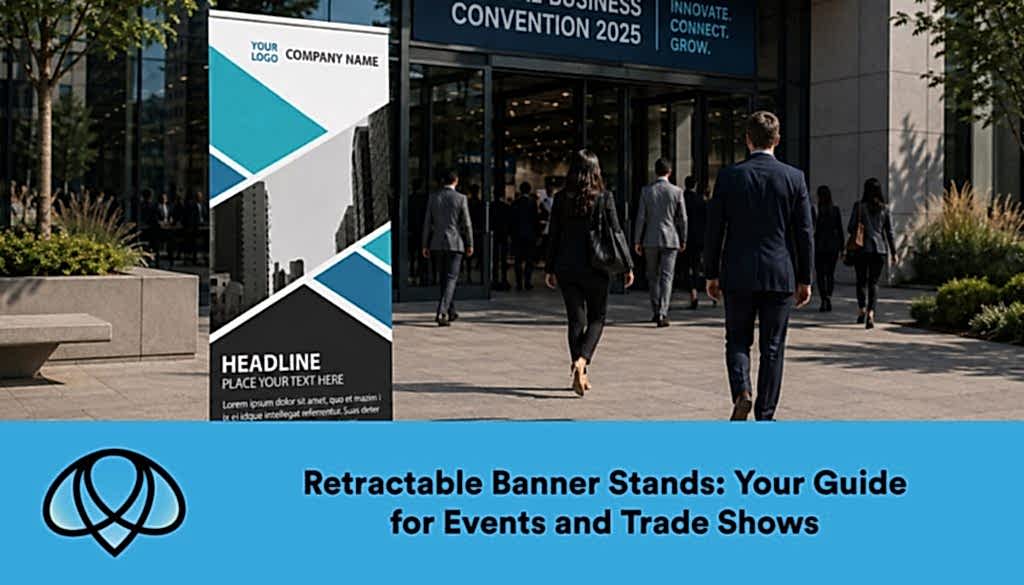
A retractable banner stand is a portable, free-standing display made up of a printed graphic that rolls into a weighted base and a telescoping pole that holds it upright. Set it up by extending the pole and pulling the banner up from the base until it clips into place, a process that takes well under a minute and requires no tools. When you’re done, the graphic retracts back into the base for storage or travel, which is where the “retractable” name comes from — it’s also commonly called a pull up banner or roll up banner. These stands are the most widely used portable display in retail, trade shows, and events because they combine a large graphic area with a small footprint. A single unit typically weighs under 15 pounds and folds down to about the size of a golf bag, making it easy for one person to carry, set up, and break down without help. Businesses like retractable banners because the cost is a one-time investment rather than a recurring expense, and because the same stand can be reused for years across dozens of events simply by swapping in a new printed graphic. The sections below cover where these displays work best, how to pick a size, and what to look for in a stand built to last. What Is a Retractable Banner Stand? At its core, a retractable banner stand is a spring-loaded cassette base with a printed graphic wound inside it, paired with an adjustable pole that locks the top of the banner in place once it’s pulled up. This mechanism is consistent across the industry: extend the telescoping pole, pull the banner up from the base, and clip it in — the entire process takes under 60 seconds with no tools required. The graphic itself is usually printed on vinyl or a coated fabric material, and the whole unit ships with a padded carrying case. Because the mechanism does the work of keeping the banner taut and upright, there’s no need for separate poles, stakes, or a wall to lean against, which is part of why these stands are so popular for indoor use. Where Retractable Banners Work Best Retractable banners are built for spaces where you need a big visual presence without permanent installation. Trade show booths are the most common setting, where a banner serves as a backdrop or side panel that reinforces branding next to a table or display. Retail storefronts use them near entrances or checkout counters to promote a sale or new product. Conference rooms, lobbies, and reception areas use them for wayfinding or company branding, and small businesses often bring one to community events, farmers markets, or pop-up shops where a professional-looking display needs to go up and come down quickly. Because the graphic stores inside a sealed base when retracted, these stands hold up well in office environments and indoor venues, though most standard models are best suited for indoor or covered outdoor use rather than direct sun and wind for extended periods. Standard Sizes and How to Choose One Retractable banners come in a handful of standard sizes, and picking the right one comes down to where you’ll display it and how much content needs to fit on the graphic. Industry product specifications confirm that the 33″ x 81″ size remains the most popular format across the trade show and events industry, balancing display area with a compact footprint. Size Best For Notes 24″ x 63″ Small booths, tabletop areas, tight retail corners Most compact and easiest to carry 33″ x 81″ Trade shows, lobbies, storefronts The industry-standard size and most popular option 36″ x 92″ Large booths, conference stages, big-impact displays Maximum visibility, slightly heavier stand If you’re unsure which size fits your space, measure the area where the stand will typically be placed and leave a few feet of clearance on either side so it doesn’t feel cramped next to a table or wall. Most Los Angeles businesses working booths and storefronts find the 33″ x 81″ size hits the right balance of visibility and portability. What Makes a Durable, Reusable Banner Stand Not all banner stands are built to the same standard, and the difference shows up after repeated use. An aluminum base and pole, rather than lightweight plastic, holds up far better to the wear of being packed, unpacked, and set up dozens of times a year. Retractable stand product specifications commonly list aluminum retractable hardware alongside heavier vinyl or coated polyester graphic materials as the combination that holds up best for frequent business use. A replaceable graphic insert is another feature worth prioritizing — it means the stand itself can be reused indefinitely while only the printed banner needs to be replaced when your messaging changes. Look for a padded travel case as well, since the case protects both the mechanism and the graphic from scuffs and dents between events. Design Tips for Roll-Up Banner Graphics A retractable banner has only a few seconds to make an impression, so the design needs to work at a glance. Trade show design research recommends prioritizing legibility at 10 to 20 feet, using bold sans-serif fonts, and keeping the headline text large enough to read from across a room — a common guideline is roughly one inch of letter height for every ten feet of expected viewing distance. Keep the message to one clear idea rather than trying to fit a full sales pitch onto the graphic. Put your logo and the single most important line of text in the top half of the banner, since that’s the area people see first at eye level. High contrast between text and background matters more than color choice alone — a busy photo background behind small text is one of the most common reasons a banner fails to read from a distance. How to Transport and Store Your Banner One of the advantages of a retractable banner is how easy it is to move between locations, but